
For more than a century, Armenian Americans have organized to win recognition of the Armenian Genocide, to support a free and secure Armenia, and to defend the rights of the Armenians of Artsakh. Armenians call this Hay Dat, the Armenian Cause. This chapter profiles the journalists, organizers, scholars and public servants who have carried it in the United States, from Vahan Cardashian in 1918 to Harut Sassounian and today's advocates on Capitol Hill.
VIII.1The Armenian Cause in America
The Armenian Cause in America has three lasting goals: recognition of and justice for the Armenian Genocide of 1915, a secure and prosperous Republic of Armenia with strong ties to the United States, and the rights of the Armenians of Artsakh, including the return of refugees and the release of Armenian prisoners.[1]
Two national organizations have led this work for decades. The Armenian National Committee of America (ANCA) began as the American Committee for the Independence of Armenia in 1918 and took its current name in 1941. Its headquarters are in Washington, with regional offices in Glendale and Watertown.[2] The Armenian Assembly of America, a non-partisan organization founded in Washington in 1972, helped secure the first congressional earthquake relief for Armenia in 1988, launched the Armenia Tree Project and in 1997 created the Armenian National Institute to document the Genocide.[3]
Both groups work through Congress, the media and local communities. In 1995 their efforts helped produce the bipartisan Congressional Caucus on Armenian Issues, which grew to 127 members during the 117th Congress.[4]

Harut Sassounian
Publisher of The California Courier, columnist and humanitarian leaderHarut Sassounian was born in Aleppo, Syria, in 1950. He holds graduate degrees from Columbia University and Pepperdine University and speaks English, Armenian, Arabic, Turkish and French.[5] From 1978 to 1982 he worked in international marketing for Procter & Gamble in Geneva, and for ten years he served as a non-governmental delegate on human rights at the United Nations in Geneva.[6]
In 1983 he became publisher of The California Courier, an English-language Armenian weekly founded in Fresno in 1958 that moved to Los Angeles in 1988. His weekly column, which he has written ever since, is reprinted in Armenian and international publications around the world and has made him one of the most widely read voices on the Armenian Genocide, Turkish denial and U.S. policy toward Armenia and Artsakh.[5]
Sassounian is also a leader in humanitarian aid. As president of the United Armenian Fund, he has led deliveries of medical supplies and other aid to Armenia valued at more than $650 million, and he served as vice chairman of Kirk Kerkorian's Lincy Foundation, which funded $242 million in infrastructure projects in Armenia.[5,6,7] In 2015, for the Genocide centennial, he published The Armenian Genocide: The World Speaks Out, 1915–2015, a collection of documents and declarations.[6]
Milestones
- 1983Becomes publisher of The California Courier and begins his weekly column
- 2009Receives the ANCA Western Region's Legacy Award
- 2015Publishes The Armenian Genocide: The World Speaks Out, 1915–2015
- 2016Receives the Golden Pen, the top prize of Armenia's Union of Journalists[6]

Vahan Cardashian
Lawyer and founder of the American Committee for the Independence of ArmeniaBorn in Caesarea (Kayseri) in the Ottoman Empire, Vahan Cardashian came to the United States in 1902, studied at Yale and earned a law degree in 1908. Before 1915 he worked as a counselor to the Ottoman Embassy in Washington and the Ottoman Consulate General in New York.[8]
After the Genocide he turned his skills to the Armenian Cause. At the end of World War I he founded the American Committee for the Independence of Armenia, which campaigned for an independent Armenia and drew in prominent Americans such as Ambassador James W. Gerard, Senator Henry Cabot Lodge, Charles Evans Hughes and Elihu Root. It had a central office in New York and 23 regional offices in 13 states.[2] Cardashian led this work until his death on June 11, 1934, and his committee evolved into today's ANCA.[8,2]

Richard G. Hovannisian
Historian of modern Armenia and advocate for Genocide recognitionBorn in Tulare, California, on November 9, 1932, Richard Hovannisian studied at UC Berkeley and UCLA and joined UCLA in 1962. In 1986 he became the first holder of the Armenian Educational Foundation Endowed Chair in Modern Armenian History there. His Armenia on the Road to Independence (1967) and four-volume Republic of Armenia (1971–1996) remain standard histories of the First Republic.[9]
Starting in 1972, he and his students recorded interviews with Genocide survivors across Southern California and beyond. The resulting collection of about 1,000 interviews, which he donated to the USC Shoah Foundation in 2018, is described by the foundation as the largest collection about the Armenian Genocide. He died in Los Angeles on July 10, 2023.[9]
VIII.2Leaders of the Advocacy Organizations
Behind every resolution and aid bill are the people who run the Armenian American advocacy organizations.
 ANCA
ANCAAram Hamparian
b. 1966 · Washington, D.C.Executive director of the ANCA and its national point person with the administration, Congress and the media. He works with more than 60 local chapters and thousands of grassroots activists, and has testified before Congress.[10]
 ANCA
ANCARaffi Hamparian
Pasadena, CaliforniaNational chairman of the ANCA, succeeding Ken Hachikian. Born in New York and raised in New Jersey, he began as an Armenian Youth Federation member, served as chief foreign affairs aide to Rep. Steven Rothman and directs federal affairs for LA Metro.[11]
 ANCA
ANCAKen Hachikian
b. 1949A Harvard-trained business leader who chaired the ANCA from 2001 to 2016. He now chairs the Armenian Legal Center for Justice and Human Rights.[12]
 Armenian Assembly
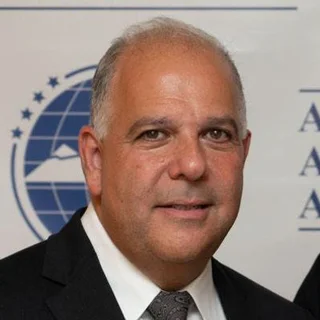
Bryan Ardouny
Washington, D.C.Joined the Armenian Assembly in 1998 and has been its executive director since 2005, playing a central role in its legislative work. He was honored for more than 25 years of service in June 2026.[13,14]
 Armenian Assembly
Van Krikorian & Anthony Barsamian
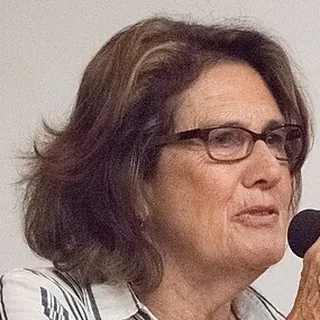
Board leadersLongtime co-chairs of the Assembly's Board of Trustees. Both received its Distinguished Service Award in 2026, Krikorian as Chair Emeritus and Barsamian as Immediate Past Co-Chair.[14]
VIII.3Scholars and Writers
Scholars and writers gave the Cause its evidence and its voice.
 Genocide Studies
Vahakn Dadrian
1926 – 2019A University of Chicago-trained sociologist who taught at SUNY Geneseo from 1970 to 1991 and directed genocide research at the Zoryan Institute. His archival work in several languages documented the Genocide and Ottoman responsibility. He was buried in Yerevan after a state ceremony.[17]
 Literature
Peter Balakian
b. 1951His memoir Black Dog of Fate (1997) won the PEN/Albrand Award, and The Burning Tigris (2003), on the Genocide and America's response, became a New York Times bestseller and won the 2005 Raphael Lemkin Prize.[18] See also Famous Armenian Americans.
 Documentation
Rouben Adalian
Washington, D.C.Director of the Armenian National Institute, the Assembly's center for Genocide research and education, honored in 2026 for more than 25 years of service.[14]
VIII.4Champions in Congress
The Cause has had determined champions in Congress, both Armenian Americans and friends of the community.
 Congress
Jackie Speier
b. 1950 · San Francisco Bay AreaHer mother's family were Armenians who lost most of their relatives in the Genocide. She represented California in the House from 2008 to 2023 and served as a co-chair of the Congressional Armenian Caucus.[19,4]
 Congress
Anna Eshoo
b. 1942 · Silicon ValleyA Silicon Valley congresswoman for 32 years (1993–2025), she is of Assyrian and Armenian descent.[20] See her profile on Famous Armenian Americans.
VIII.5Advocacy Today
The work continues. On September 14–15, 2026, ANCA advocates from more than 30 states visited all 435 House offices and all 100 Senate offices, holding more than 150 policy meetings on the release of Armenian hostages, the return of Artsakh refugees and Armenia's security.[21,1] The Armenian Assembly's Advocacy Summit Scholarship grew from 20 students in 2024 to 130 in 2026, training a new generation of advocates.[14]
Anyone can take part: by contacting elected officials, joining a local chapter, supporting humanitarian programs in Armenia or sharing this history. See Get Involved to start.
Photo credits
Portraits via Wikimedia Commons and official sources. Aram Hamparian: ANCA, courtesy; Raffi Hamparian: ANCA, courtesy; Ken Hachikian: The Armenian Weekly, courtesy; Bryan Ardouny: Armenian Assembly of America, courtesy; Anthony Barsamian: Armenian Assembly of America, courtesy; Van Krikorian: Armenian Assembly of America, courtesy; Carolyn Mugar: USDAgov, Public domain; Vahakn Dadrian: Tzolag Hovsepian, CC BY-SA 4.0; Peter Balakian: kellywritershouse, CC BY 2.0; Rouben Adalian: UCLA Promise Armenian Institute, courtesy; Jackie Speier: United States Congress, Public domain; Anna Eshoo: United States Congress, Public domain; Harut Sassounian: Laurent Vartanian, CC BY-SA 4.0; Vahan Cardashian: DinaS, CC BY-SA 4.0; Richard G. Hovannisian: iravabannet, CC BY 3.0.
References
- The Armenian Weekly — “Congress Rallies for Return of Artsakh Refugees, Release of Hostages.” https://armenianweekly.com/2026/09/16/congress-rallies-for-return-of-artsakh-refugees-release-of-hostages/
- Wikipedia — “Armenian National Committee of America.” https://en.wikipedia.org/wiki/Armenian_National_Committee_of_America
- Wikipedia — “Armenian Assembly of America.” https://en.wikipedia.org/wiki/Armenian_Assembly_of_America
- Armenian Assembly of America — “Armenian Caucus Members Overwhelmingly Re-Elected.” https://www.armenian-assembly.org/post/armenian-caucus-members-overwhelmingly-re-elected
- The California Courier — “About The California Courier and its publisher.” https://www.thecaliforniacourier.com/about-page/
- Wikipedia — “Harut Sassounian.” https://en.wikipedia.org/wiki/Harut_Sassounian
- Los Angeles Times — “Armenian Americans and genocide recognition (profile of Harut Sassounian).” https://www.latimes.com/archives/la-xpm-2010-apr-23-la-oe--morrison-20100424-21-story.html
- Wikipedia — “Vahan Cardashian.” https://en.wikipedia.org/wiki/Vahan_Cardashian
- Wikipedia — “Richard G. Hovannisian.” https://en.wikipedia.org/wiki/Richard_G._Hovannisian
- Wikipedia — “Aram Hamparian.” https://en.wikipedia.org/wiki/Aram_Hamparian
- ANCA — “Raffi Hamparian to Serve as ANCA's New National Chairman.” https://anca.org/raffi-hamparian-to-serve-as-ancas-new-national-chairman/
- Wikipedia — “Ken Hachikian.” https://en.wikipedia.org/wiki/Ken_Hachikian
- Armenian Mirror-Spectator — “Armenian Assembly to Honor Longtime Leaders and Staff at Boston Celebration.” https://mirrorspectator.com/2026/04/16/armenian-assembly-to-honor-longtime-leaders-and-staff-at-boston-celebration/
- Armenian Assembly of America — “Armenian Assembly Honors Longtime Leaders and Staff at Celebration of Service in Boston.” https://www.armenian-assembly.org/post/armenian-assembly-honors-longtime-leaders-and-staff-at-celebration-of-service-in-boston
- Armenia Tree Project — “About Armenia Tree Project.” https://armeniatree.org/about
- Wikipedia — “Carolyn Mugar.” https://en.wikipedia.org/wiki/Carolyn_Mugar
- Wikipedia — “Vahakn Dadrian.” https://en.wikipedia.org/wiki/Vahakn_Dadrian
- Wikipedia — “Peter Balakian.” https://en.wikipedia.org/wiki/Peter_Balakian
- Wikipedia — “Jackie Speier.” https://en.wikipedia.org/wiki/Jackie_Speier
- Wikipedia — “Anna Eshoo.” https://en.wikipedia.org/wiki/Anna_Eshoo
- Ground News — “ANCA Advocates Take Armenian American Strategic Priorities to Capitol Hill.” https://ground.news/article/anca-advocates-take-armenian-american-strategic-priorities-to-capitol-hill